Substantia Nigra: Location, Function, and Anatomy
Learn where the substantia nigra is located, how its subdivisions and dopamine pathways work, and how it contributes to movement and reward.
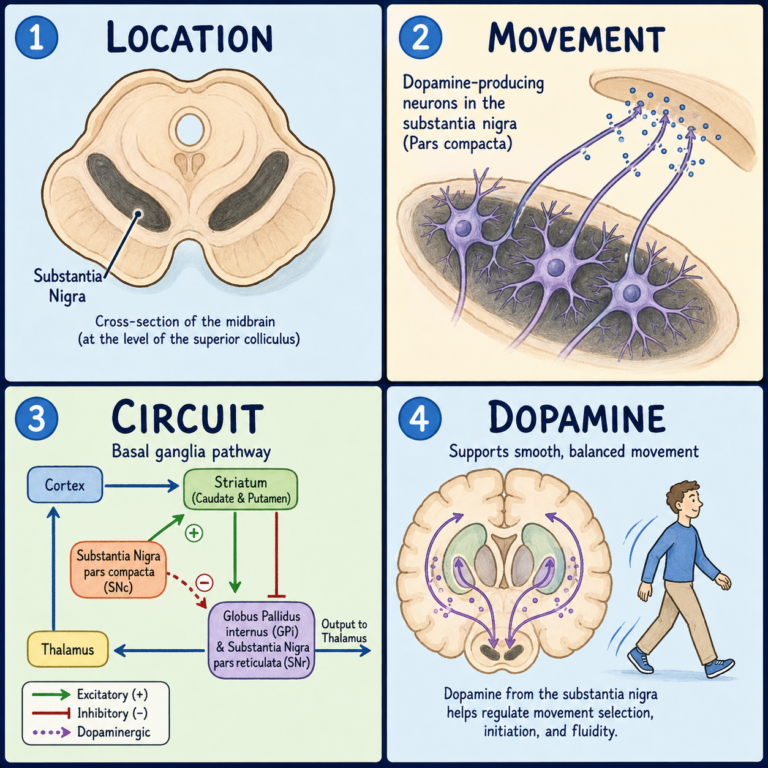
Learn where the substantia nigra is located, how its subdivisions and dopamine pathways work, and how it contributes to movement and reward.
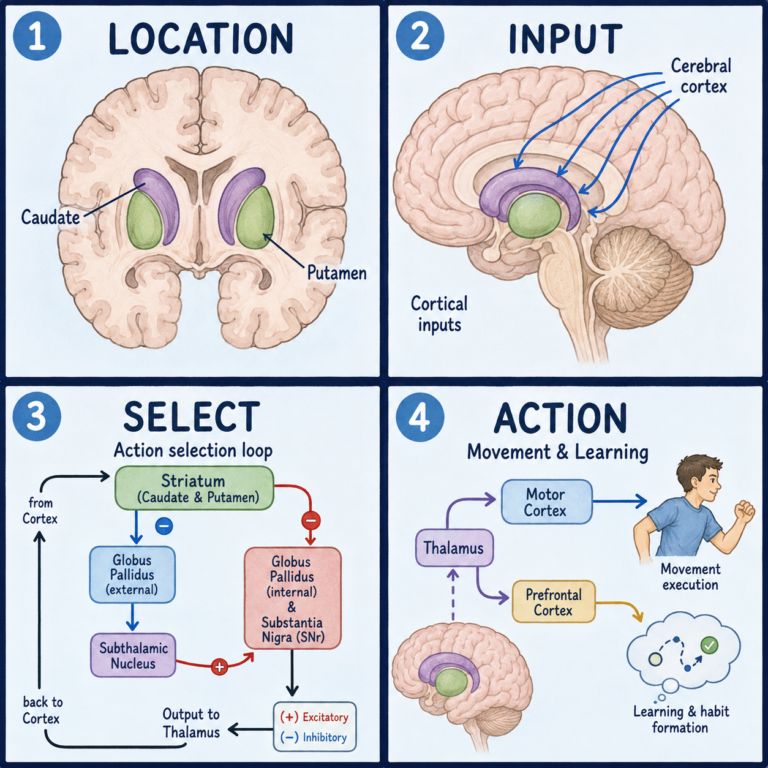
Explore the striatum’s location, caudate and putamen anatomy, basal ganglia connections, and roles in movement, learning, motivation, and action selection.
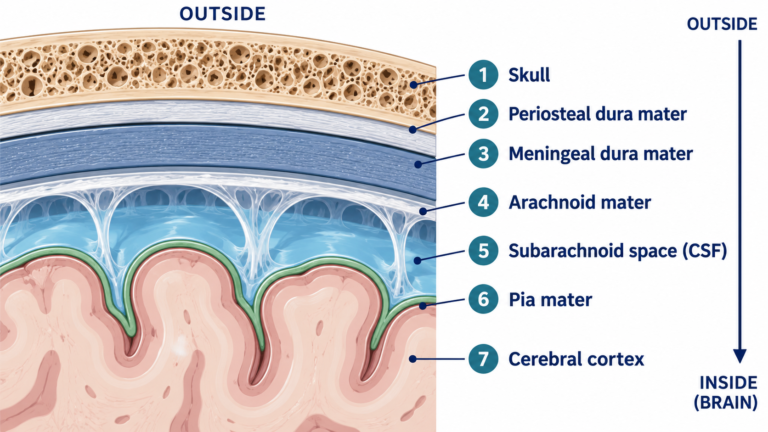
The meninges are the three layers covering the brain and spinal cord — dura, arachnoid, and pia mater. Learn each layer, the subarachnoid space, and why it matters clinically.
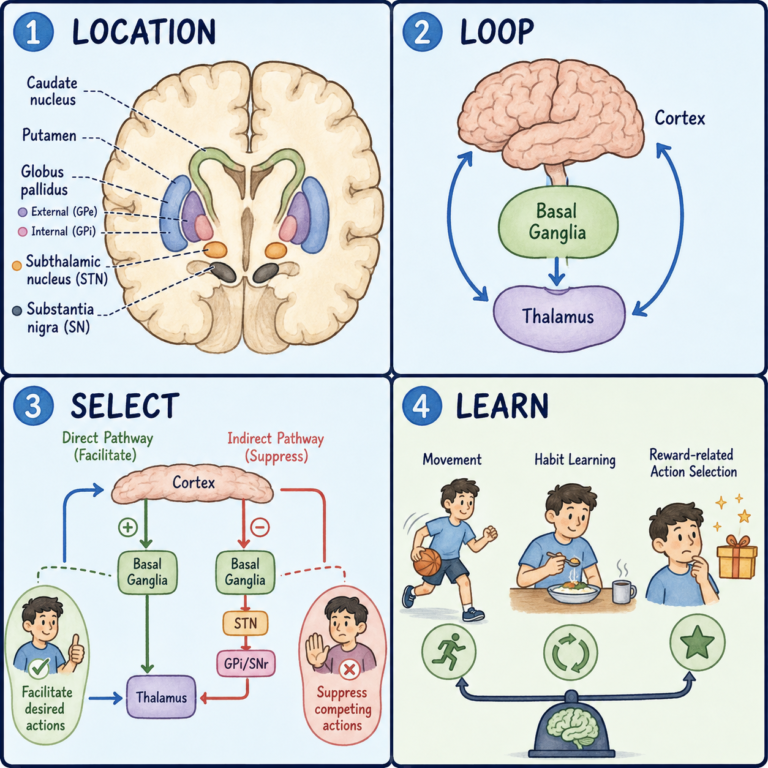
Explore the basal ganglia’s deep-brain nuclei, connections, direct and indirect pathways, and roles in movement, action selection, habit learning, and reward.
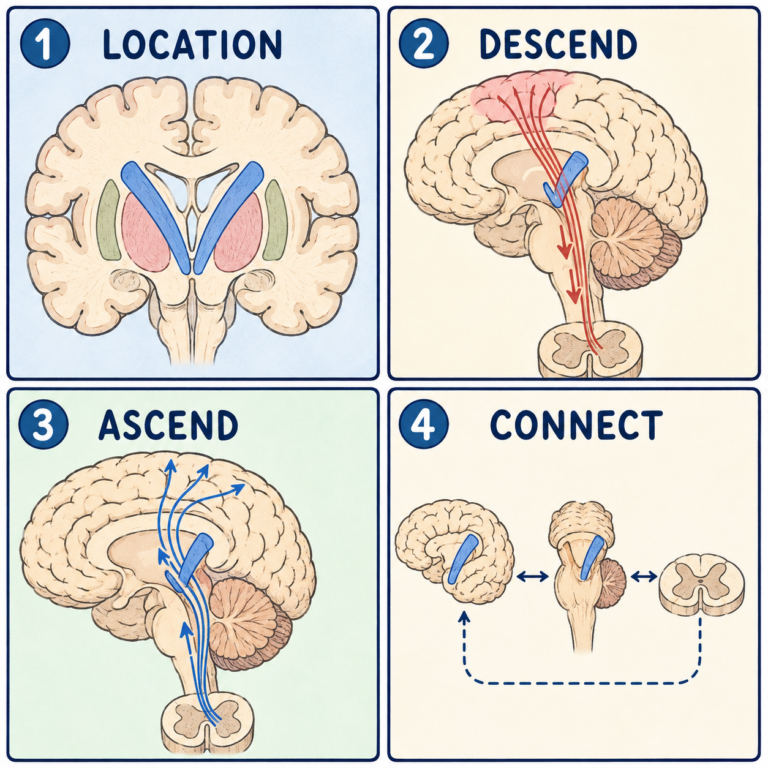
Learn where the internal capsule is located, how its limbs are organized, and how compact motor and sensory fibers connect the cortex with lower pathways.
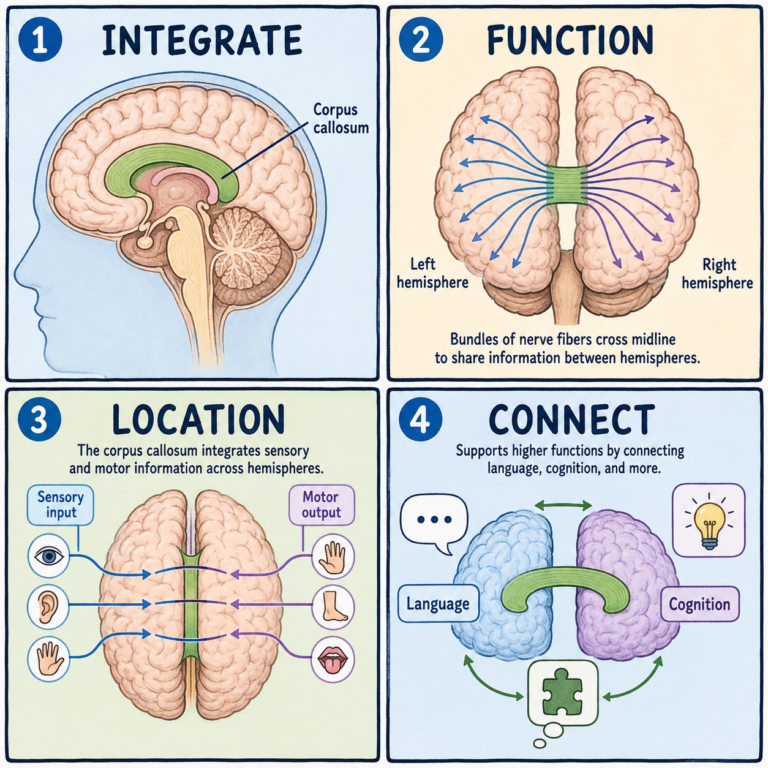
Learn where the corpus callosum is located, how its fiber bundles connect the cerebral hemispheres, and how it supports integrated brain function.
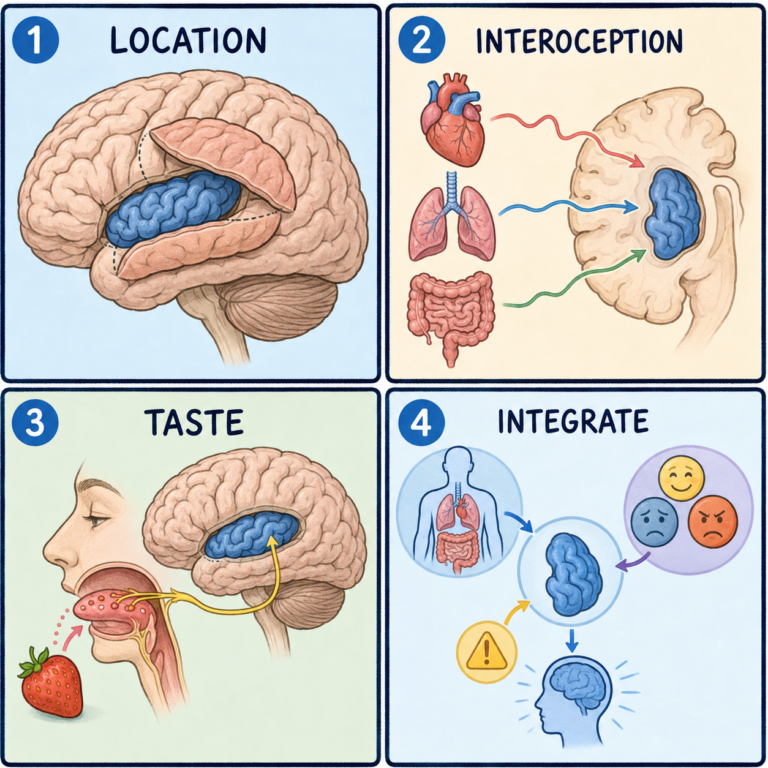
Explore the insular cortex’s hidden location, anatomy, connections, and roles in interoception, taste, emotion, pain, and salience processing.
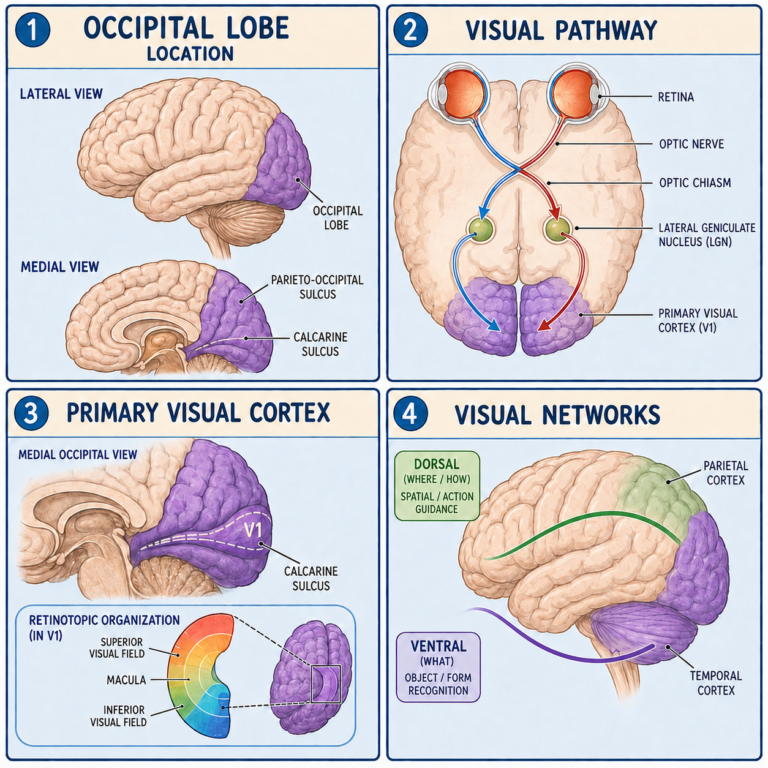
Learn the occipital lobe’s location, anatomy, visual cortex organization, pathways, functions, and how occipital damage affects vision.
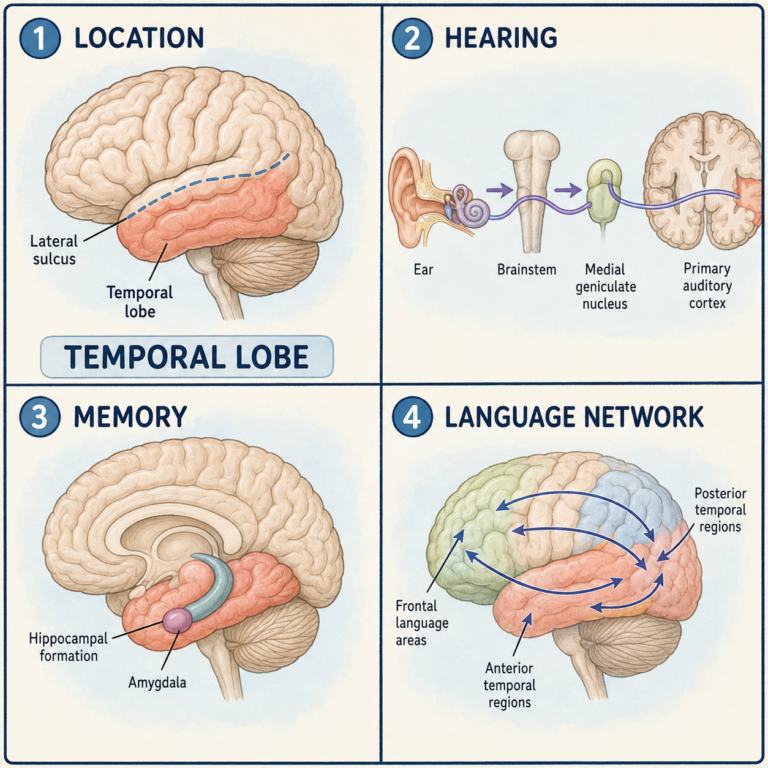
Explore temporal lobe location, anatomy, auditory and language processing, memory functions, major pathways, and effects of temporal lobe injury.