How Does the Brain Control the Autonomic Nervous System?
Learn how the forebrain, hypothalamus, brainstem, spinal cord, and visceral feedback coordinate sympathetic, parasympathetic, and enteric functions.
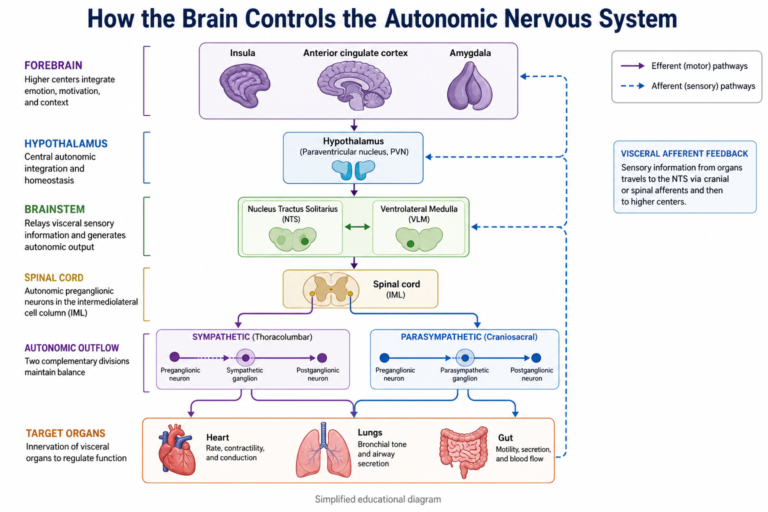
Learn how the forebrain, hypothalamus, brainstem, spinal cord, and visceral feedback coordinate sympathetic, parasympathetic, and enteric functions.
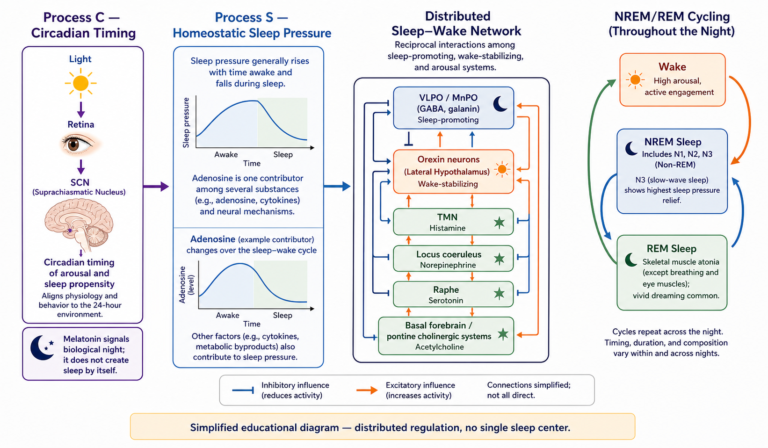
Learn how circadian timing, homeostatic sleep pressure, and distributed neural circuits coordinate wakefulness, NREM sleep, and REM sleep.
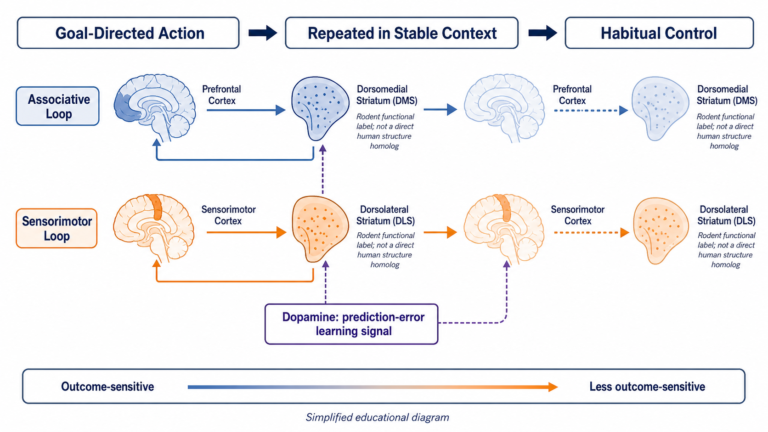
Learn how repeated behavior can shift from goal-directed to habitual control, how corticostriatal circuits and dopamine contribute, and why “66 days” is not a rule.
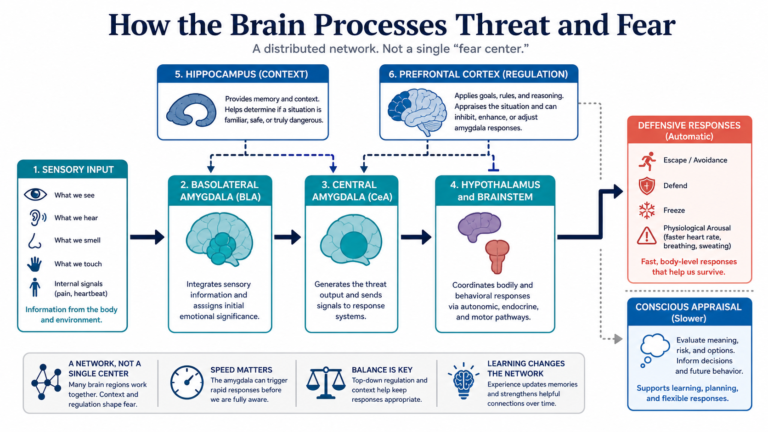
Learn how the amygdala, sensory pathways, hippocampus, prefrontal cortex, hypothalamus, brainstem, body, and learning contribute to fear.
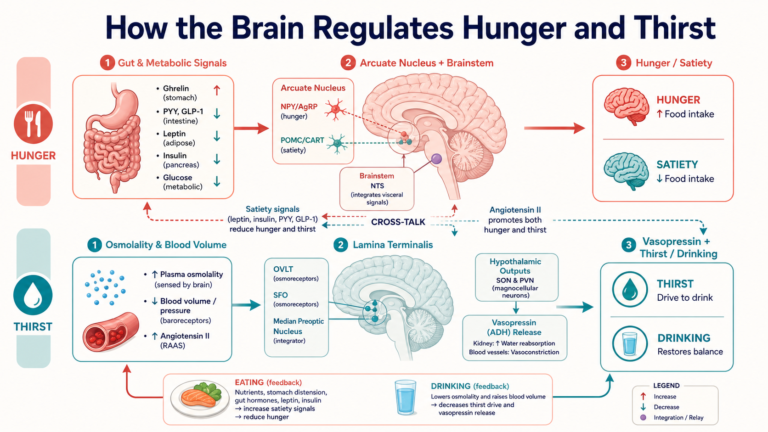
Learn how the hypothalamus, brainstem, lamina terminalis, hormones, nerves, reward, learning, and sensory cues regulate eating and drinking.
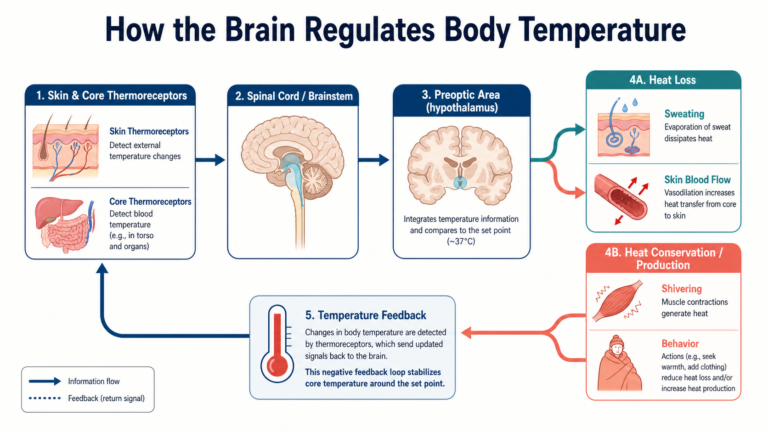
Learn how thermoreceptors, the preoptic hypothalamus, brainstem, autonomic nerves, hormones, muscles, skin blood flow, sweating, and behavior regulate temperature.
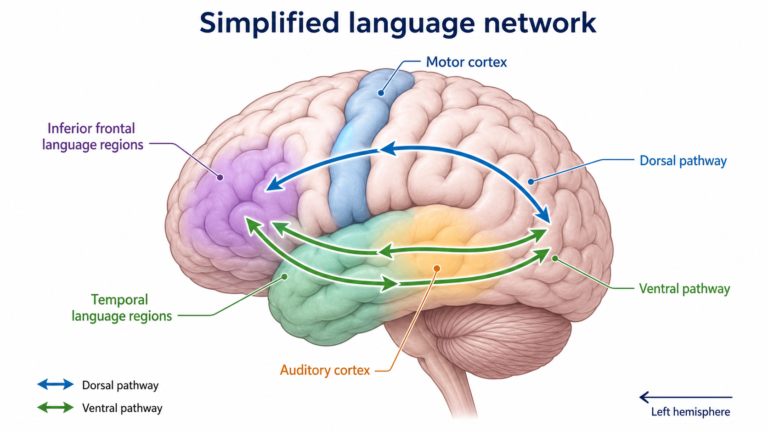
See how distributed brain networks connect sounds, signs, words, meaning, grammar, and speech—and why Broca’s and Wernicke’s areas are only part of the story.
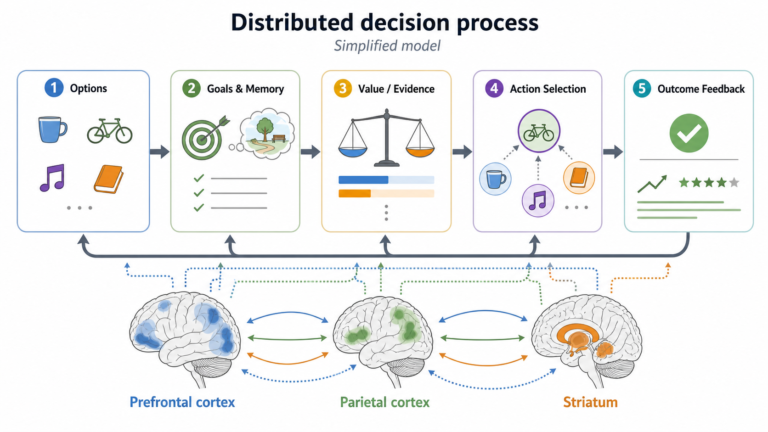
Learn how the brain represents options, estimates value, weighs uncertainty, selects an action, and learns from the result.
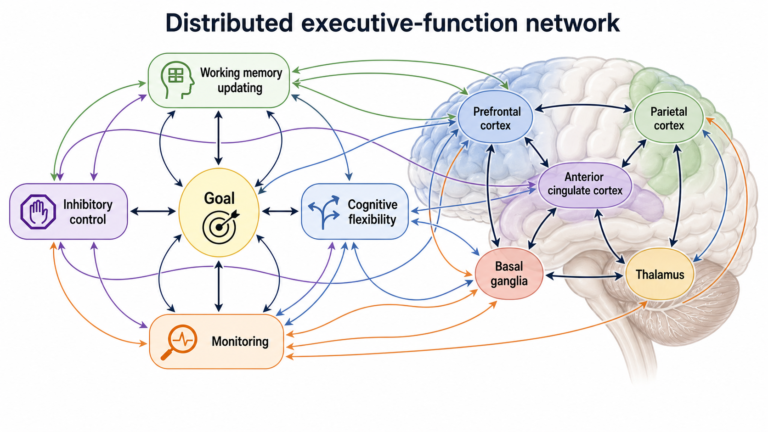
Learn how working memory, inhibitory control, cognitive flexibility, planning, and goal management arise from distributed frontal–parietal brain networks.