
How Does the Brain Create Emotions?
Learn how distributed brain networks combine body signals, sensory information, memory, appraisal, and action to produce emotional experience and expression.
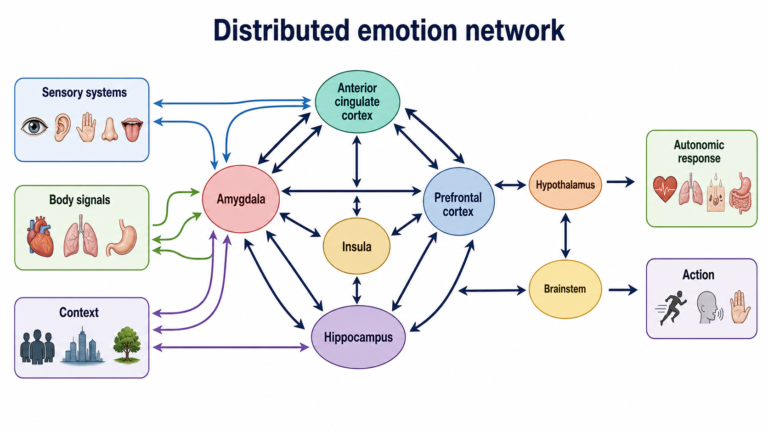
Learn how distributed brain networks combine body signals, sensory information, memory, appraisal, and action to produce emotional experience and expression.
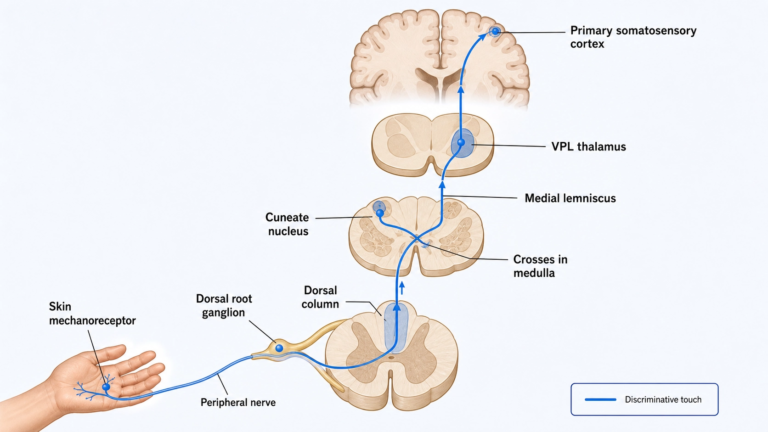
Learn how skin mechanoreceptors convert pressure and vibration into neural signals and how spinal, thalamic, and cortical pathways create touch perception.
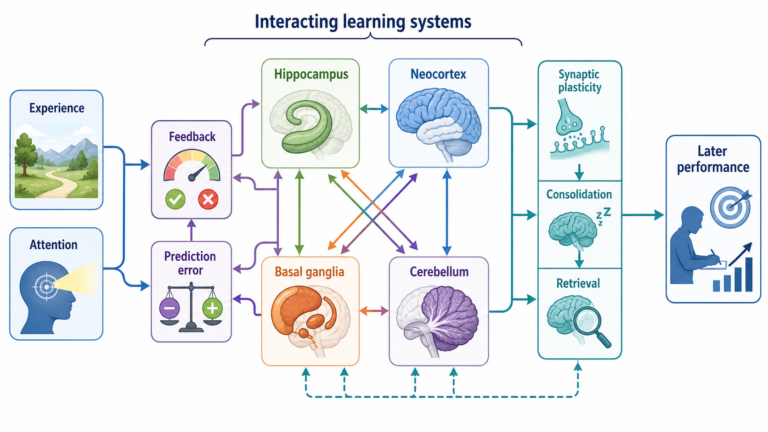
Learn how synaptic plasticity, attention, prediction error, memory systems, practice, feedback, and sleep help the brain acquire knowledge and skills.
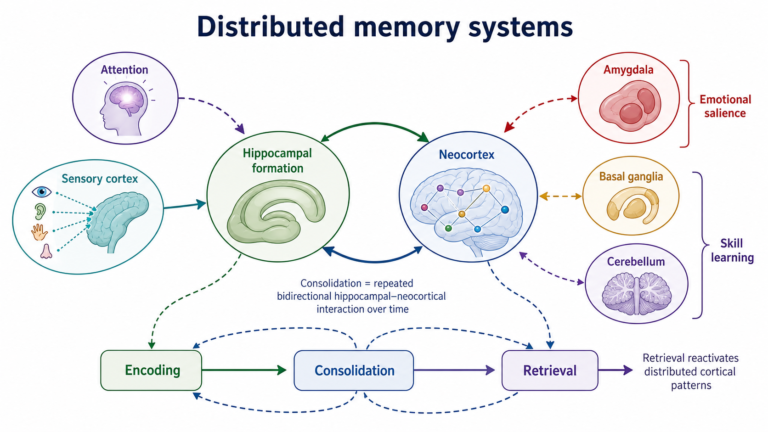
Learn how attention, the hippocampus, neocortex, amygdala, basal ganglia, cerebellum, and synaptic plasticity contribute to different kinds of memory.
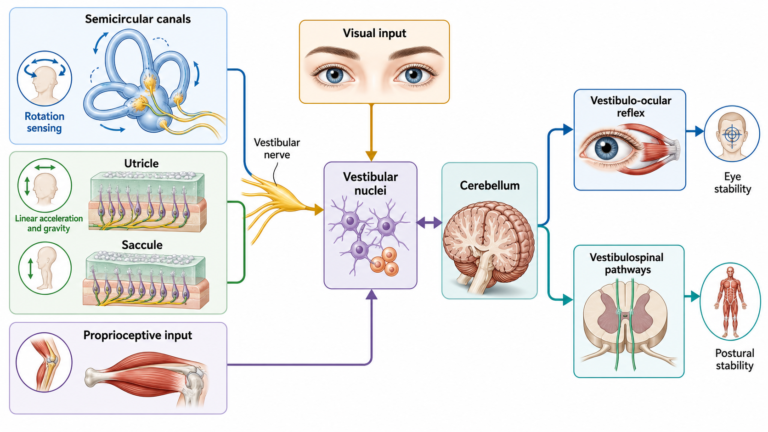
Learn how the inner-ear vestibular system, vision, proprioception, brainstem, cerebellum, and spinal pathways work together to stabilize gaze and posture.
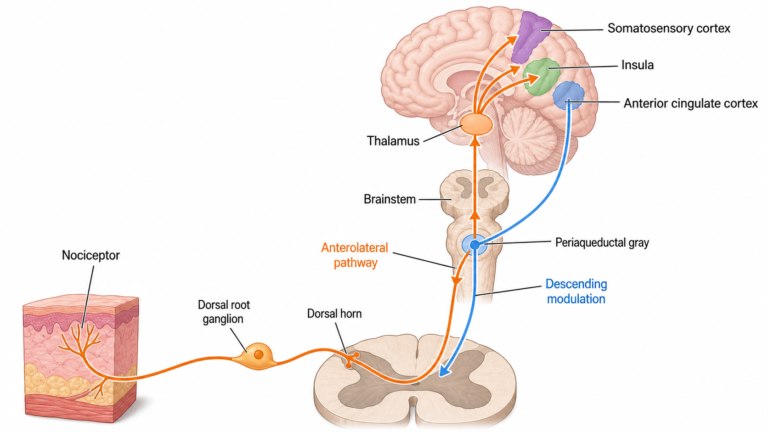
Learn the difference between pain and nociception and how peripheral nerves, spinal cord, brainstem, thalamus, and cortical networks shape pain.
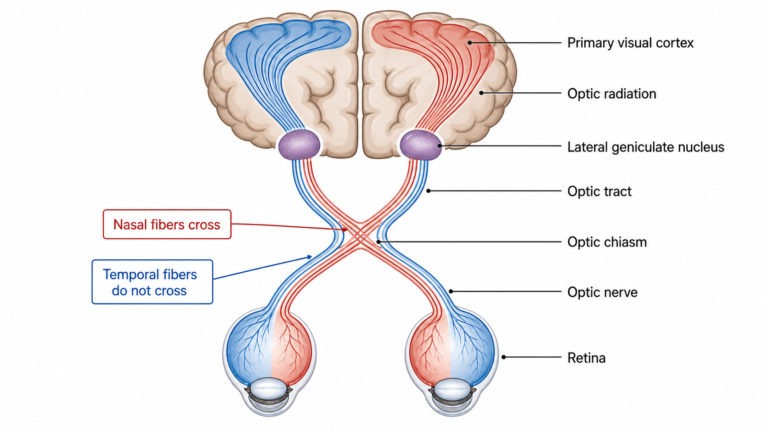
Learn how the retina converts light into neural signals and how the optic nerve, thalamus, and visual cortex organize those signals into useful vision.
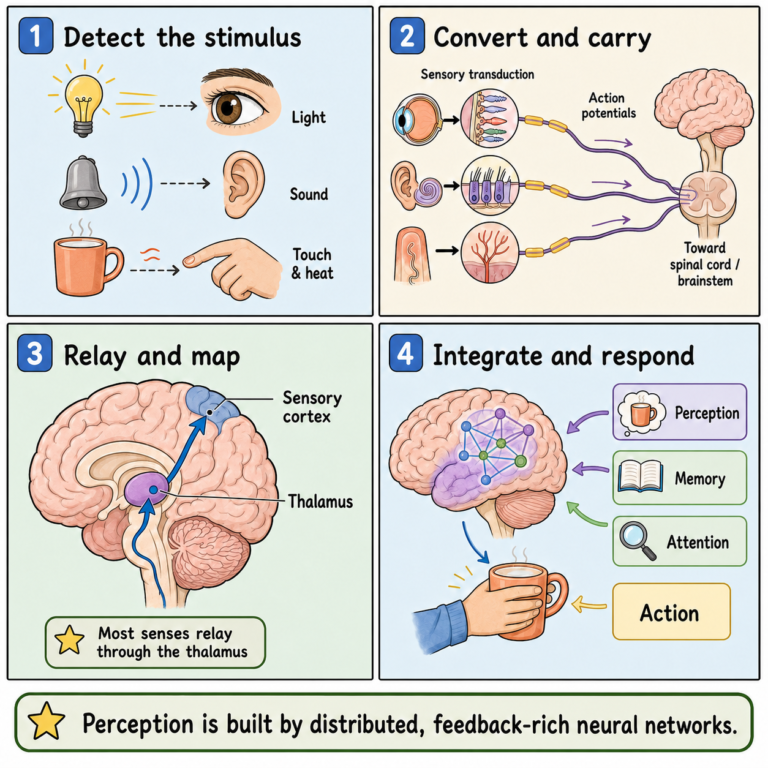
Learn how sensory receptors convert touch, light, sound, and chemicals into neural signals that the brain organizes into perception and action.
How Does the Brain Control Movement? Introduction Every voluntary movement—whether reaching for a cup, typing on a keyboard, or taking a single step—depends on the precise coordination of multiple regions of the brain. Movement is not controlled by a single “movement center.” Instead, it results from the continuous interaction of the cerebral cortex, basal ganglia,…