How Does the Brain Create Emotions?
The Amygdala Isn’t a “Fear Center”
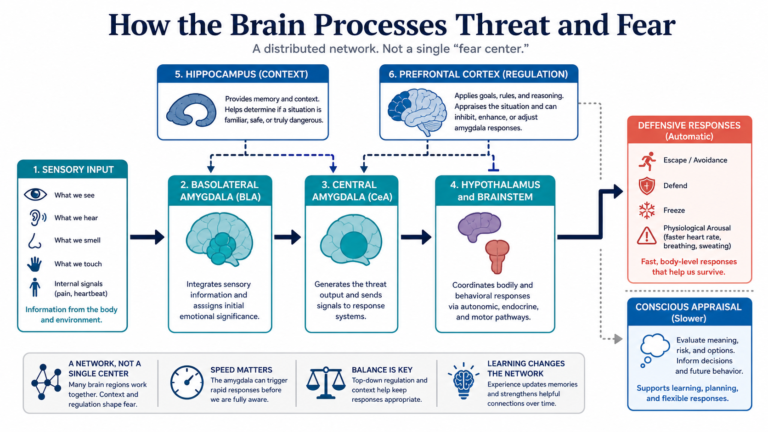
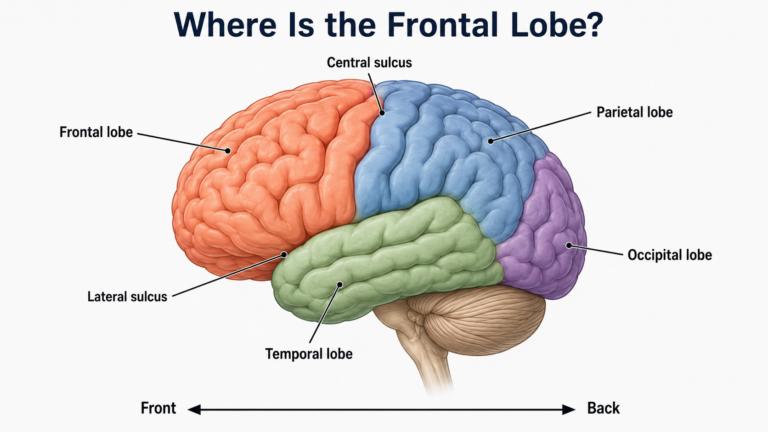
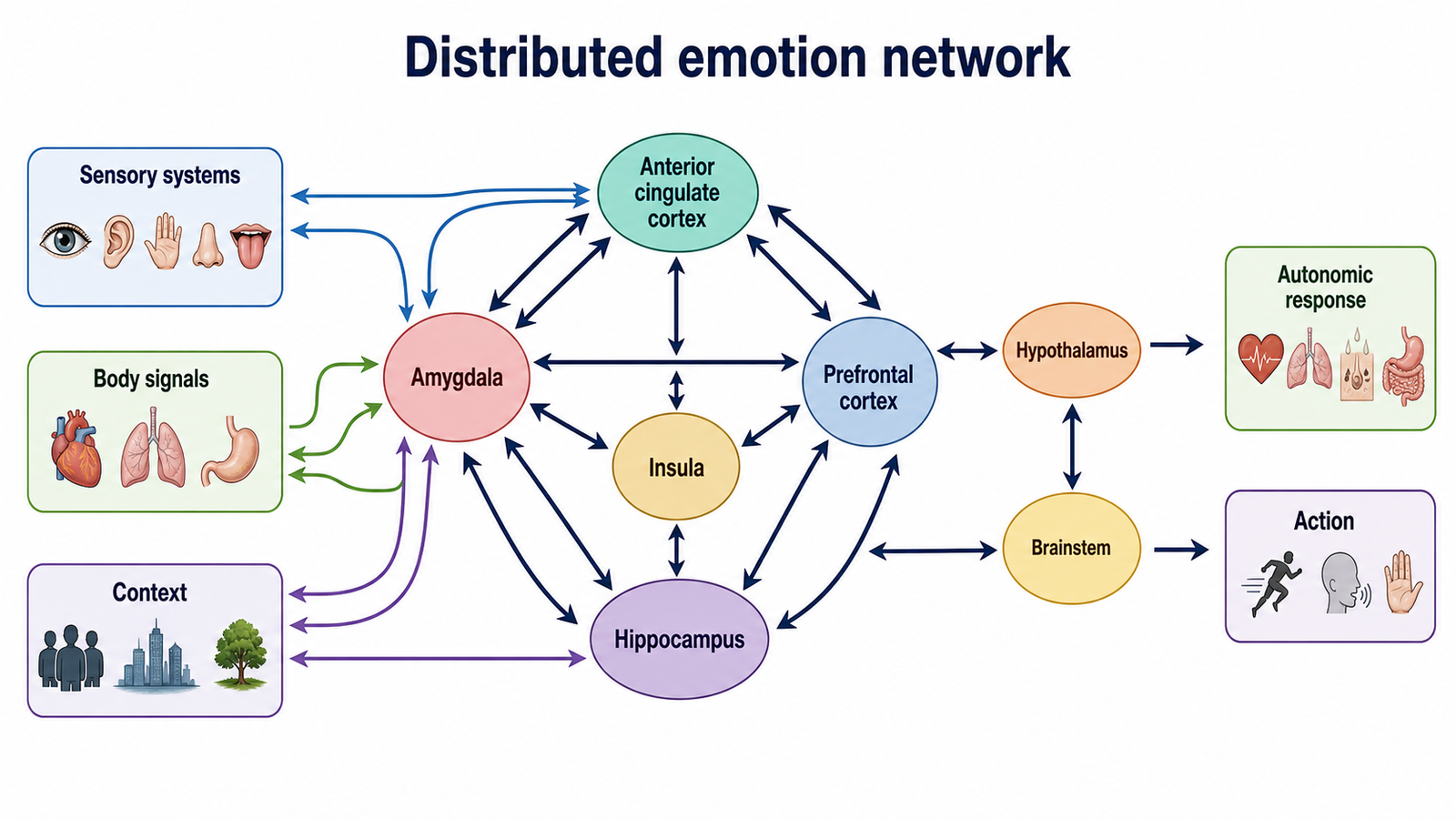
The amygdala gets cast as the brain’s fear button so often that the label sticks even in casual conversation. It’s misleading. The amygdala is genuinely important for detecting biologically relevant events and learning associations, but its nuclei participate in threat learning, reward-related processing, ambiguity, and social signals — not fear alone. That’s really just one example of a wider pattern: the brain doesn’t create any single emotion in one dedicated “center.” An emotional episode emerges when distributed cortical and subcortical networks evaluate what’s happening internally and externally, regulate body state, assign significance, retrieve relevant memories, and prepare a response — with the insula, anterior cingulate, orbitofrontal and medial prefrontal cortex, hippocampus, hypothalamus, striatum, brainstem, and sensory systems all making different, interacting contributions.
An emotion is several things happening at once
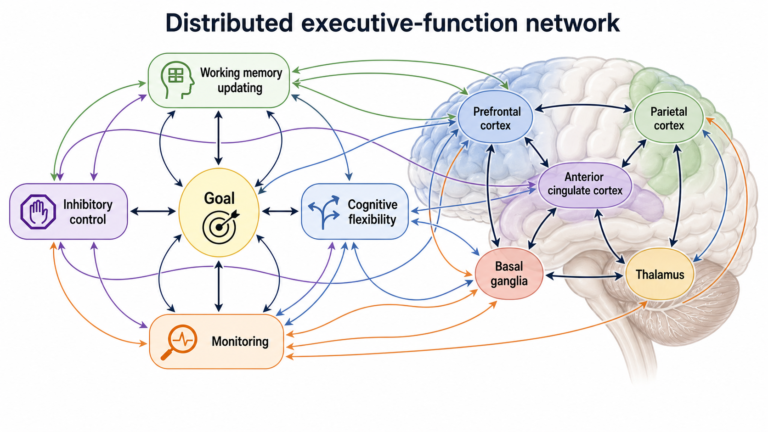
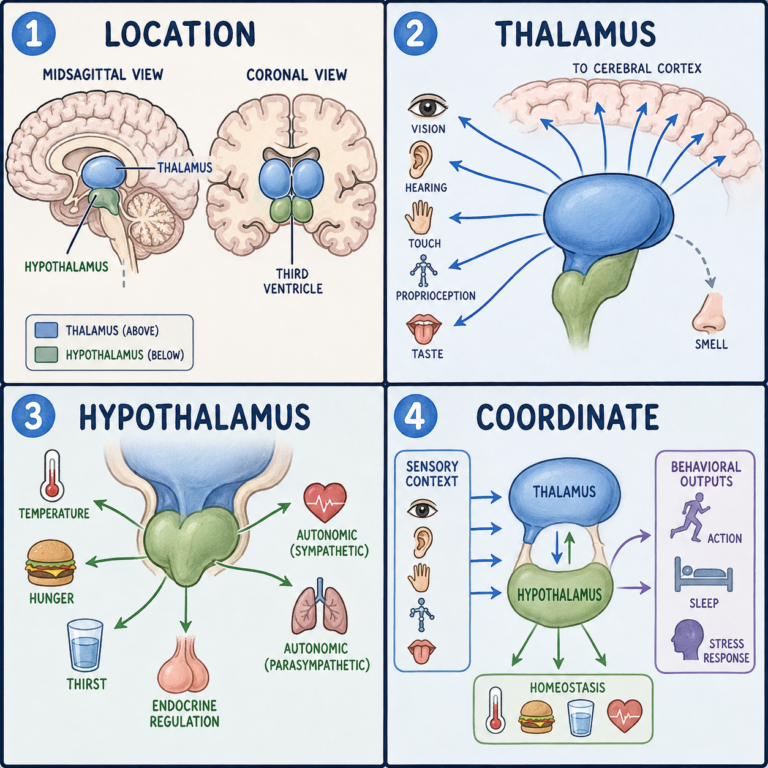
What gets called “an emotion” actually bundles together subjective feeling, shifts in attention, autonomic and hormonal responses, facial and bodily expression, memory, and readiness to act — components that can unfold on different time scales and don’t always align perfectly with each other. The insula contributes representations of internal bodily state; anterior cingulate and prefrontal regions help monitor conflict, evaluate meaning, regulate action, and factor in goals or social context; hypothalamic and brainstem pathways coordinate the autonomic and endocrine side of things; the hippocampus supplies context and memory. Fear, anger, sadness, joy, and disgust remain useful psychological categories, but neuroscience doesn’t support a simple one-region-per-emotion map — different emotions share components, and the same brain regions turn up across many mental and bodily processes, not just emotional ones.
Regulation reshapes the episode, it doesn’t switch it off
Reappraisal, shifting attention, social support, learning, and changing the situation itself can all alter emotion-related activity as it’s happening. That’s not the same as suppressing feeling — regulation means adjusting the response to current goals and context, not eliminating the emotion. It’s also worth being clear that reason doesn’t simply override emotion: cognitive control can modify an emotional response, but reason and emotion function as interacting systems, not opposing forces competing for control. And however brain-based all of this is, emotional experience isn’t purely a brain event either — it depends on interactions between brain, body, environment, memory, and interpretation together.
When emotional symptoms need more than an explanation
Persistent or overwhelming emotional symptoms can arise from psychiatric, neurologic, endocrine, sleep, medication, and social factors together, and no brain diagram can diagnose an individual case. Immediate help is appropriate whenever there’s danger of self-harm or harm to others.
Related: How Does the Brain Produce Fear? · How Does the Brain Control the Autonomic Nervous System? · How Does the Brain Form Memories?
References
- Purves D, Augustine GJ, Fitzpatrick D, et al. Emotions. Neuroscience. NCBI Bookshelf.
- LeDoux JE. Emotion Circuits in the Brain. Annual Review of Neuroscience. 2000;23:155-184.
- Lindquist KA, Wager TD, Kober H, Bliss-Moreau E, Barrett LF. The brain basis of emotion: a meta-analytic review. Behavioral and Brain Sciences. 2012;35:121-143.
- Bear MH, Reddy V, Bollu PC. Neuroanatomy, Hypothalamus. StatPearls. NCBI Bookshelf.
Written by: MedMaru Editorial Team
Reviewed for medical accuracy by:
S. Chang, KMD