Brain Ventricles: Location, Function, and Anatomy
Explore the lateral, third, and fourth ventricles, cerebrospinal fluid production and circulation, and how the ventricular system supports the brain.
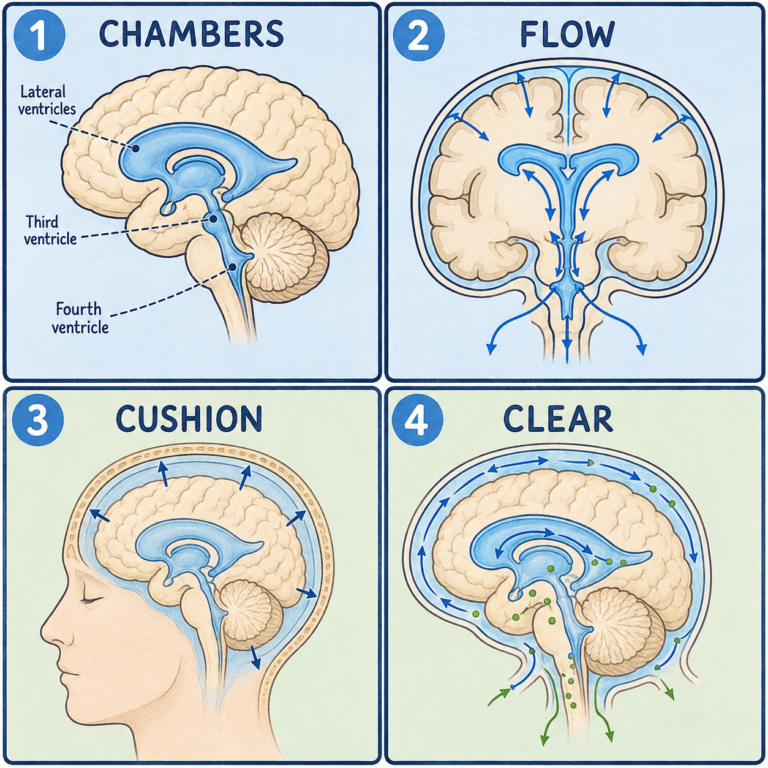
Explore the lateral, third, and fourth ventricles, cerebrospinal fluid production and circulation, and how the ventricular system supports the brain.
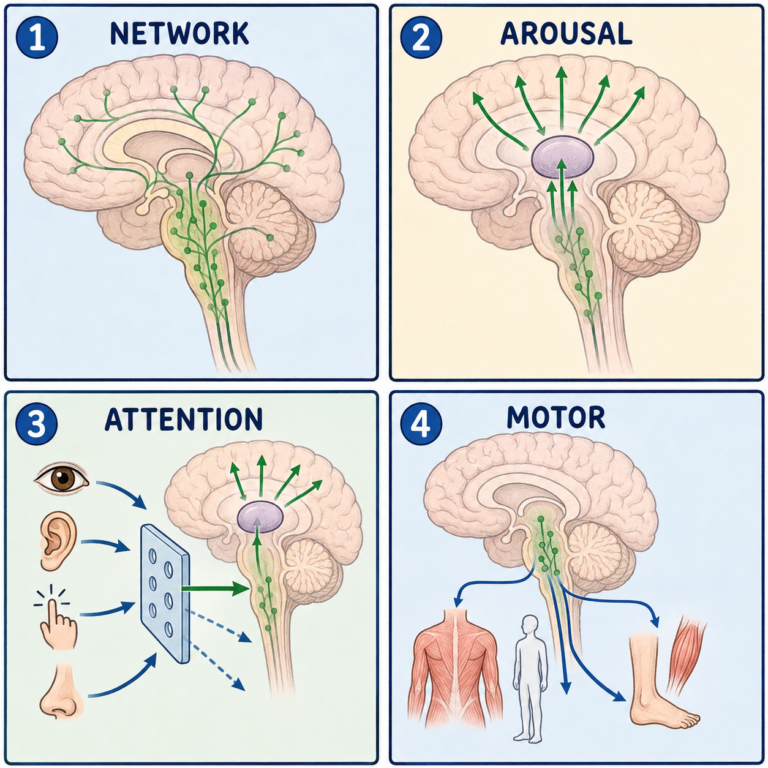
Explore the reticular formation’s brainstem network, ascending and descending pathways, and roles in arousal, attention, pain modulation, and motor control.
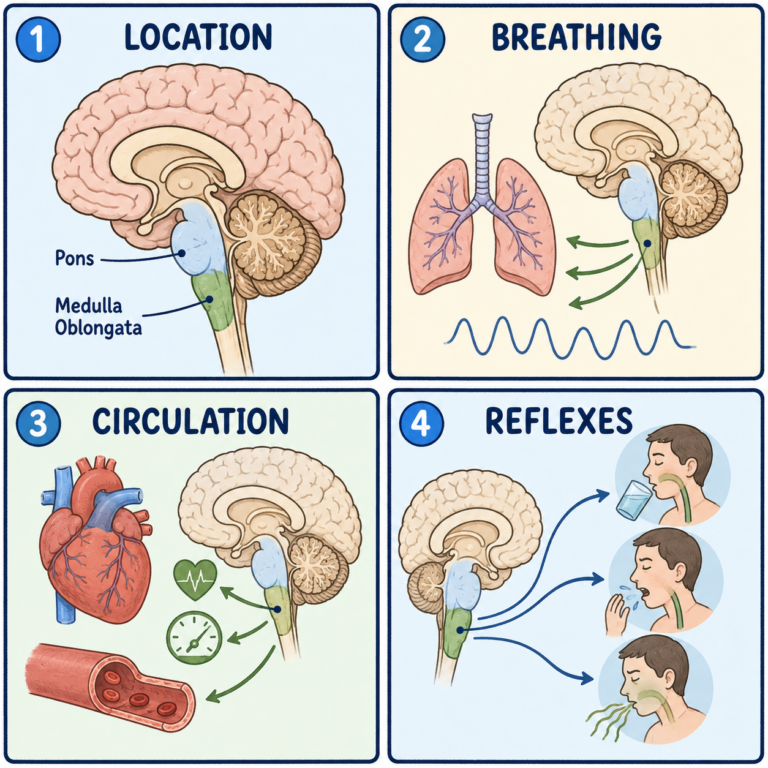
Learn the medulla oblongata’s location, nuclei, pathways, and roles in breathing, circulation, swallowing, coughing, and other vital reflexes.
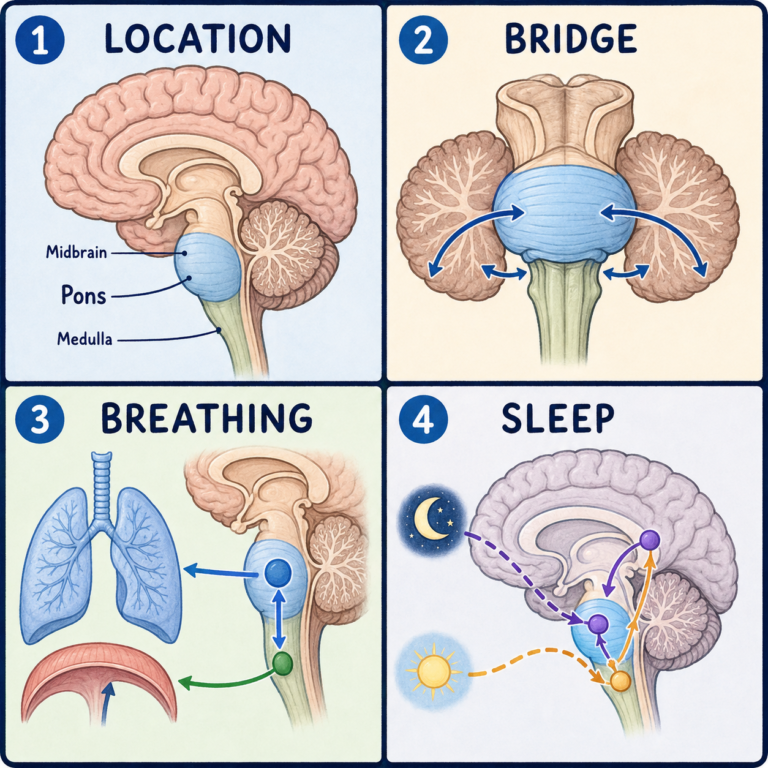
Explore the pons’ location, nuclei, tracts, cranial nerve functions, cerebellar connections, and roles in breathing, sleep, sensation, and movement.
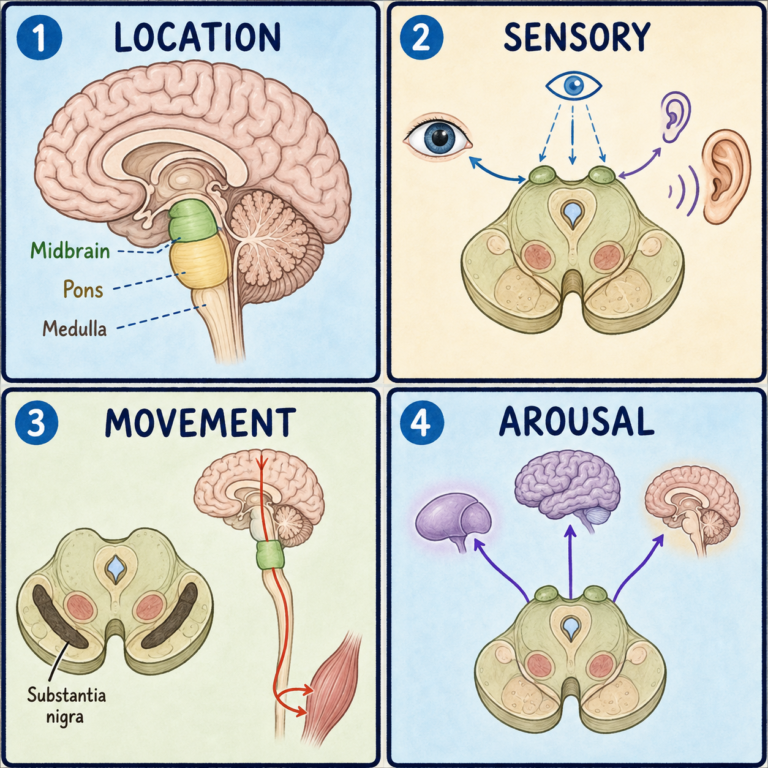
Learn the midbrain’s location, internal anatomy, cranial nerve nuclei, sensory and motor pathways, and roles in movement, orienting, and arousal.
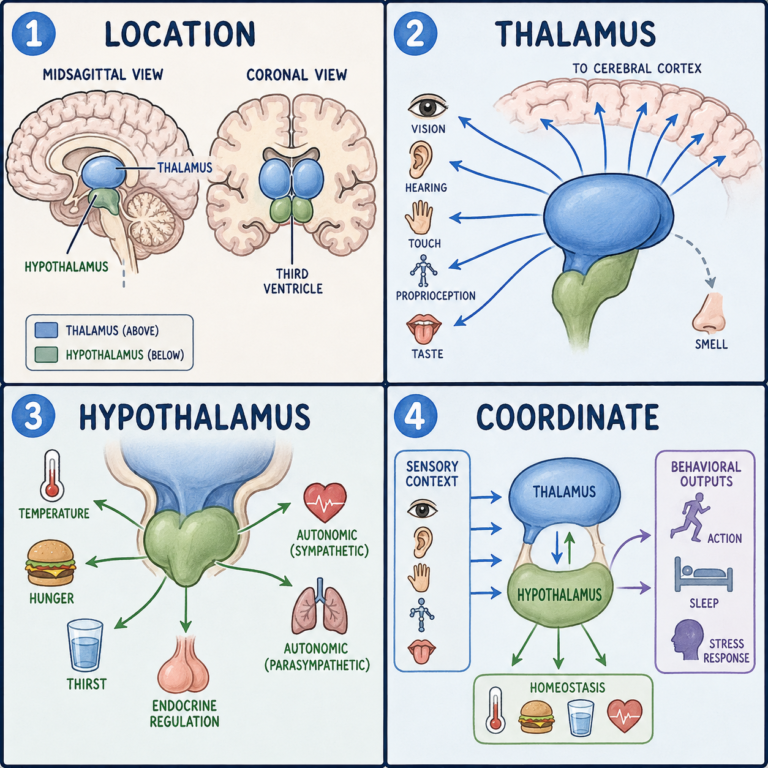
Compare the thalamus and hypothalamus: their locations, nuclei, connections, and roles in sensory relay, homeostasis, endocrine control, and behavior.
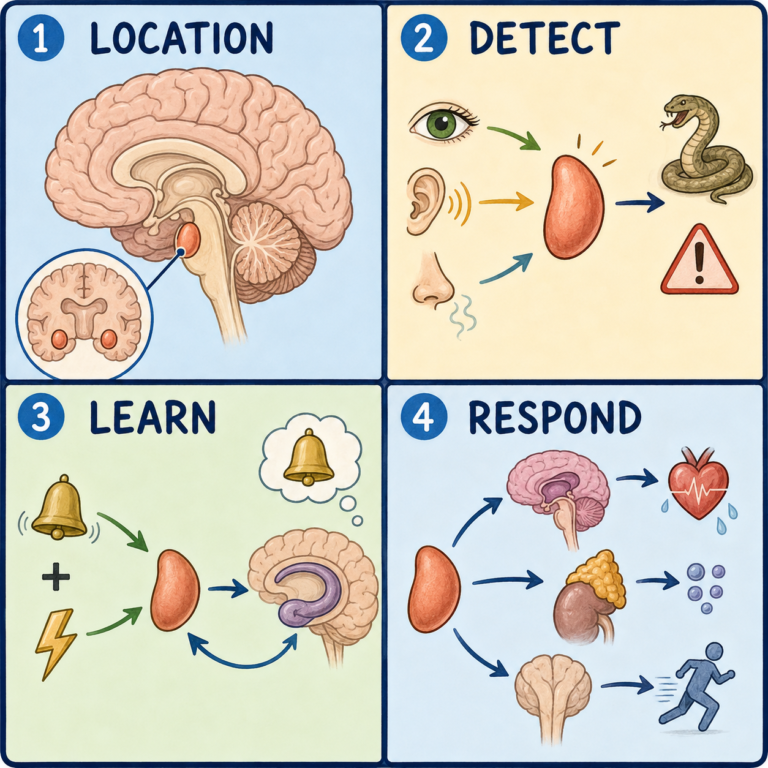
Learn where the amygdala is located, how its nuclei and connections are organized, and how it supports emotion, salience, learning, and memory.
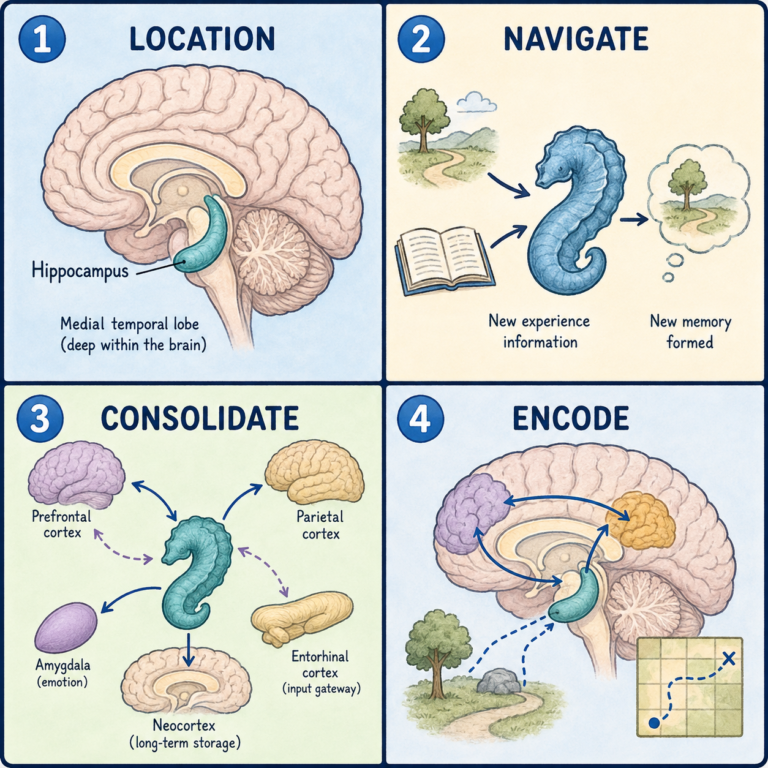
The hippocampus turns new experiences into lasting memories and maps where you are. Learn where it sits in the brain, how it is built, and what damage does.
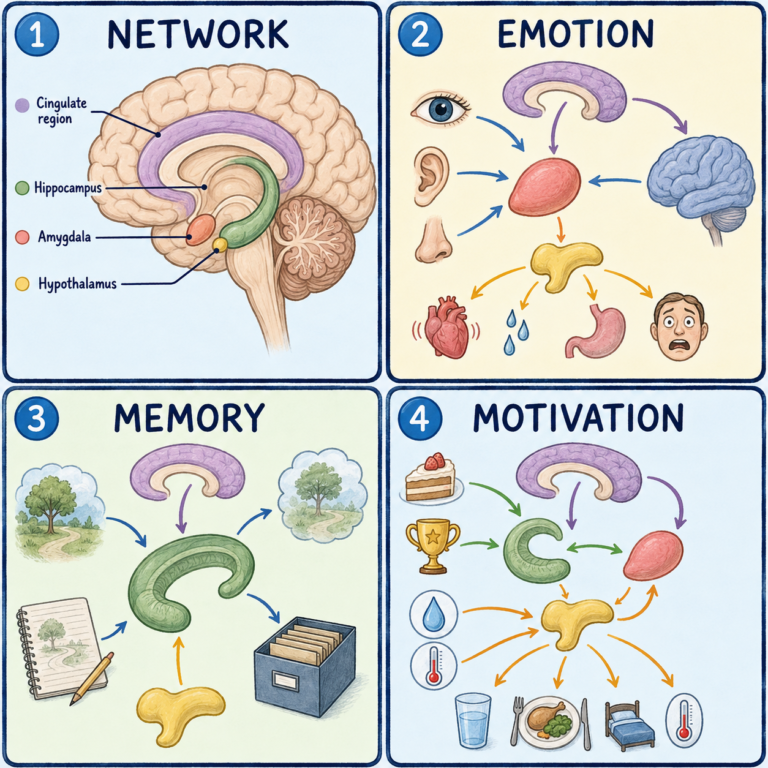
Explore the limbic system’s major structures, connections, and roles in emotion, memory, motivation, autonomic regulation, and goal-directed behavior.