Reticular Formation: Location, Function, and Anatomy
Explore the reticular formation’s brainstem network, ascending and descending pathways, and roles in arousal, attention, pain modulation, and motor control.
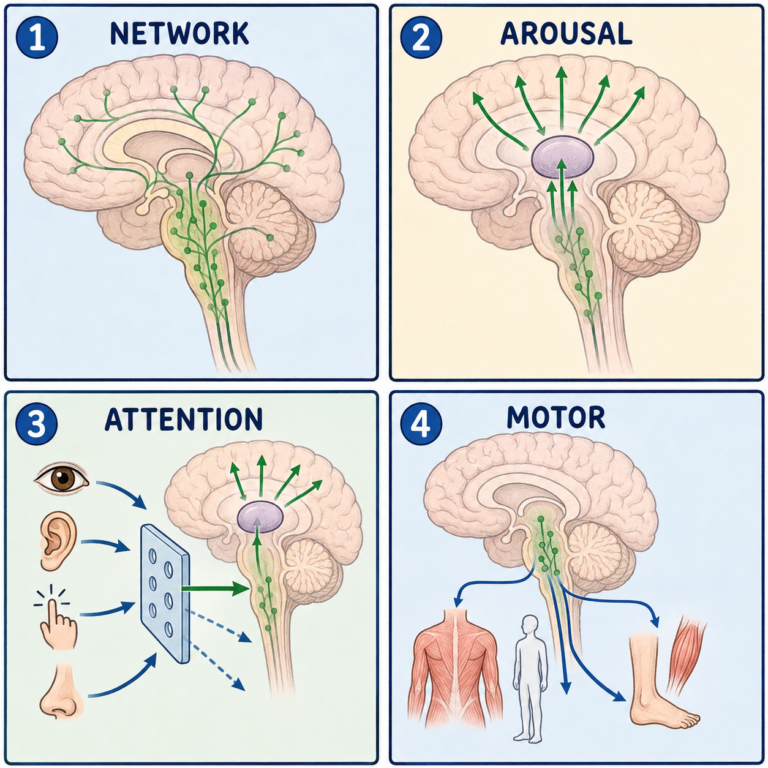
Explore the reticular formation’s brainstem network, ascending and descending pathways, and roles in arousal, attention, pain modulation, and motor control.
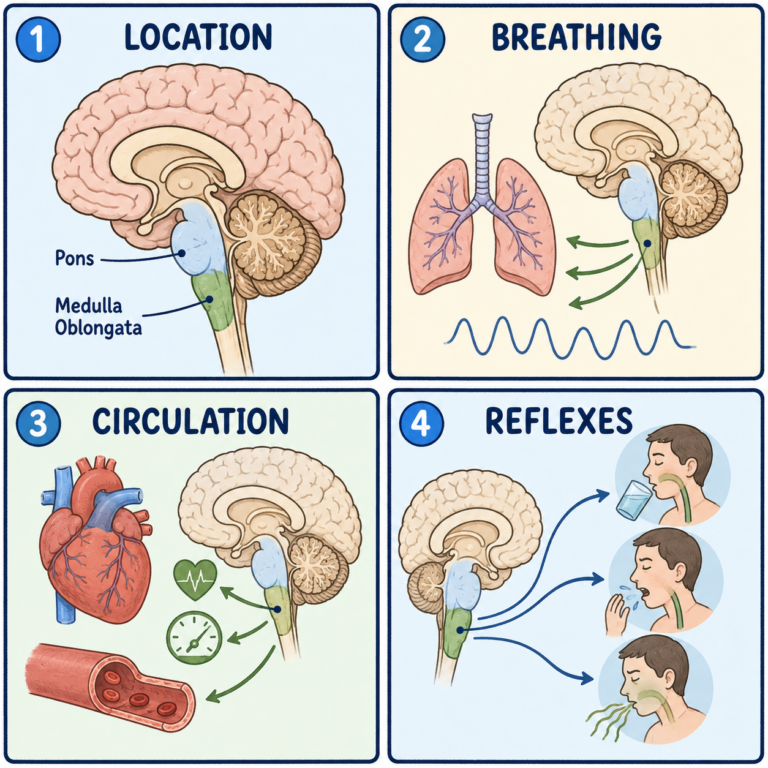
Learn the medulla oblongata’s location, nuclei, pathways, and roles in breathing, circulation, swallowing, coughing, and other vital reflexes.
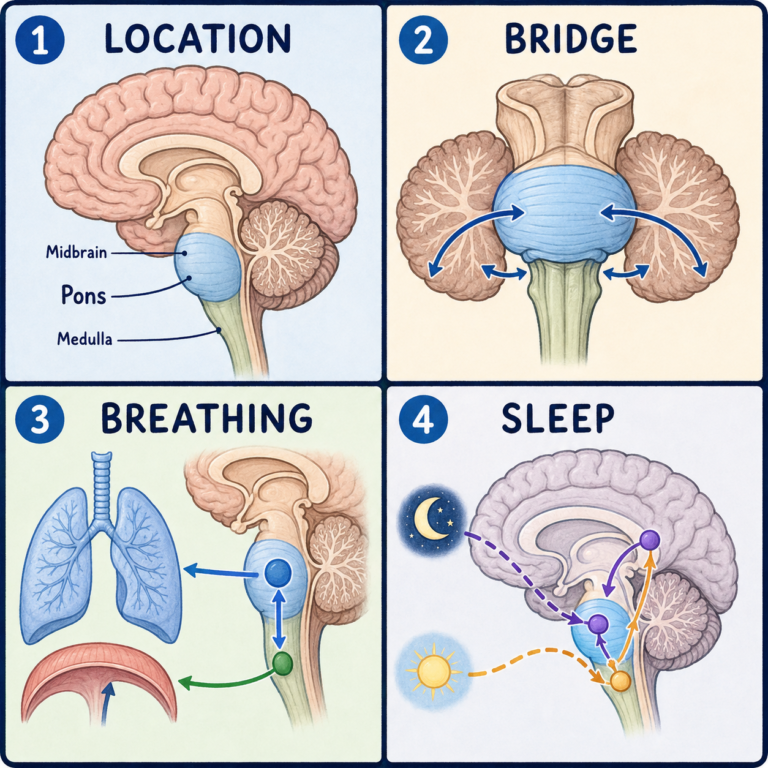
Explore the pons’ location, nuclei, tracts, cranial nerve functions, cerebellar connections, and roles in breathing, sleep, sensation, and movement.
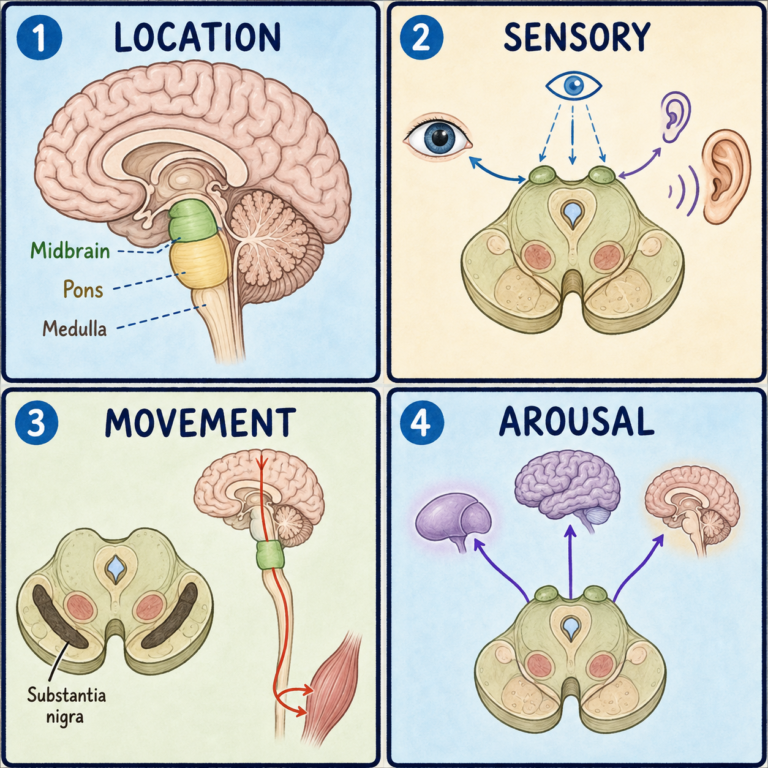
Learn the midbrain’s location, internal anatomy, cranial nerve nuclei, sensory and motor pathways, and roles in movement, orienting, and arousal.
The brainstem is the lower part of the brain that connects the cerebrum and diencephalon to the spinal cord. It is much smaller than the cerebrum, yet every breath you take, every heartbeat, and your ability to stay awake depend on it. It is made of three parts, the midbrain, the pons, and the medulla…