
What Is the Nervous System? Structure and Main Functions
What Is the Nervous System?
Introduction
The nervous system is the body’s communication network. It allows different parts of the body to send and receive information, helping you move, think, feel, and respond to your surroundings. It also controls many automatic functions that keep you alive, such as breathing and heartbeat.
Without the nervous system, the brain would not be able to communicate with the rest of the body.
The nervous system is a network of nerves, the brain, and the spinal cord that carries information throughout the body. It controls movement, sensation, thinking, emotions, and many automatic body functions.
What Is the Nervous System?
The nervous system is one of the body’s most important organ systems. It collects information from inside and outside the body, processes that information, and sends signals that help the body respond.
It works continuously, even while you are asleep.
The Two Main Parts of the Nervous System
The nervous system is divided into two major parts.
Central Nervous System (CNS)
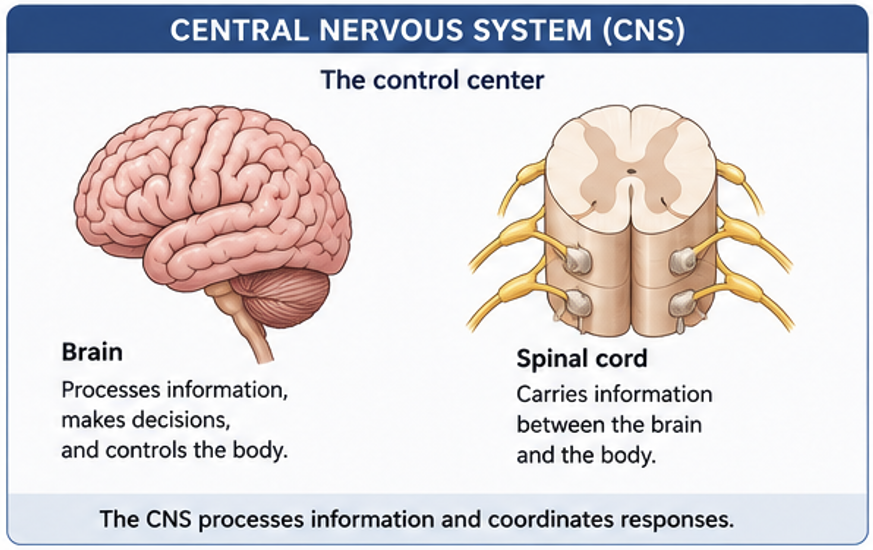
The central nervous system consists of the brain and the spinal cord.
It processes information, makes decisions, and sends commands to the rest of the body.
Peripheral Nervous System (PNS)
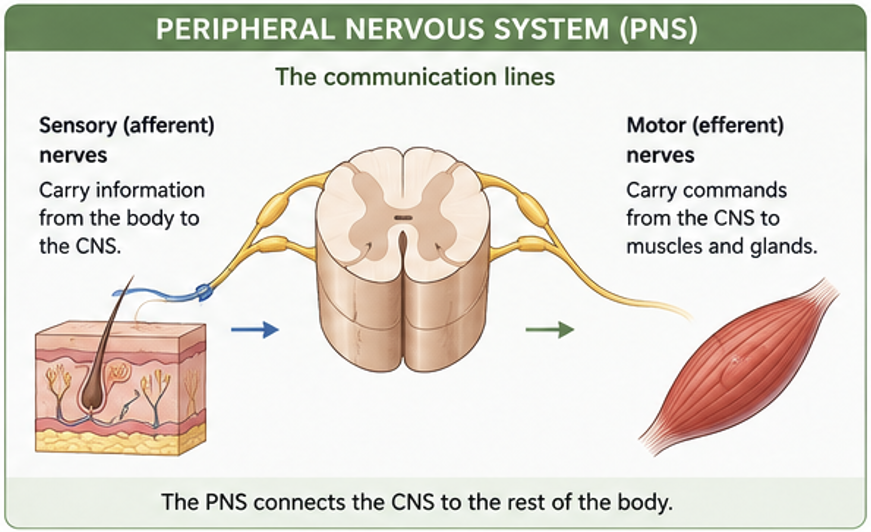
The peripheral nervous system includes all the nerves outside the brain and spinal cord.
These nerves carry sensory information to the brain and deliver motor commands from the brain to muscles and organs.
How Does the Nervous System Work?
The nervous system works by sending electrical signals through neurons.
Sensory receptors detect changes in the environment and send information to the brain through sensory nerves.
The brain processes this information and sends responses back through motor nerves, allowing the body to react quickly and accurately.
What Does the Nervous System Control?
The nervous system controls many important functions, including:
- Movement
- Vision
- Hearing
- Touch
- Smell
- Taste
- Learning
- Memory
- Emotions
- Speech
- Balance
- Breathing
- Heart rate
- Digestion
Nearly every activity in the human body depends on the nervous system.
The Nervous System Never Stops Working
The nervous system remains active throughout your life.
Even during sleep, it continues to regulate breathing, heartbeat, body temperature, and other essential functions.
It also helps organize memories and supports learning while you sleep.
Common Misunderstanding
Is the brain the entire nervous system?
No.
The brain is only one part of the nervous system. The spinal cord and the peripheral nerves are also essential because they carry information between the brain and the rest of the body.
- The nervous system is the body’s communication network.
- It consists of the central nervous system and the peripheral nervous system.
- The brain, spinal cord, and nerves work together to send and receive information.
- The nervous system controls movement, sensation, thinking, emotions, and automatic body functions.
- It works continuously throughout your life.
Related Articles
- What Is the Brain?
- What Does the Brain Do?
- How Does the Brain Work?
- What Is the Central Nervous System?
- What Is a Neuron?
References
- Standring S, ed. Gray’s Anatomy: The Anatomical Basis of Clinical Practice. 42nd ed. Elsevier; 2020.
- National Institutes of Health. Information about the Brain. NIH Curriculum Supplement Series. NCBI Bookshelf.
- Akinrodoye MA, Lui F. Neuroanatomy, Somatic Nervous System. StatPearls. Updated November 7, 2022.
Written by: MedMaru Editorial Team
Reviewed for medical accuracy by:
S. Chang, KMD